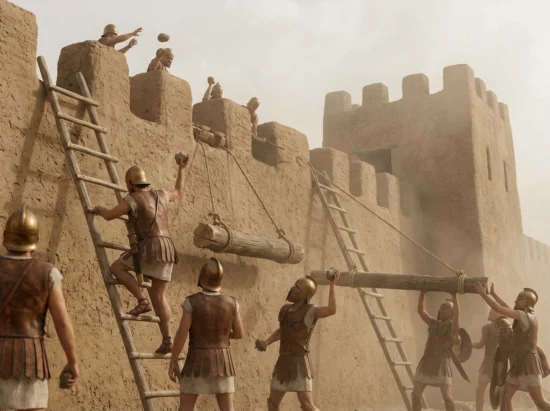
The Evolution of Siege Technology
A Brief History of Fortification and Defense
Siege technology has been a cornerstone of human civilization for thousands of years, with the earliest recorded examples dating back to ancient Mesopotamia. From the rammed earth walls of Ur to the elaborate fortifications of medieval Europe, siege technology has played a crucial role in the development of human societies.
The Early Days of Siege Technology
In ancient times, siege technology was primarily focused on the construction of defensive walls and fortifications. The earliest known examples of siege technology include the rammed earth walls of Ur, which date back to around 2100 BC. These walls were constructed using a mixture of soil, gravel, and water, and were designed to withstand the rigors of siege warfare.
As civilizations developed and urban centers grew, the need for more sophisticated defensive systems became apparent. The ancient Egyptians, for example, developed a sophisticated system of fortifications that included high walls, bastions, and gates. These fortifications were designed to protect the city from invading armies and to provide a safe haven for the population.
The Medieval Period and the Development of Gunpowder
The medieval period saw the development of siege technology to a new level, with the introduction of gunpowder and the construction of elaborate fortifications. The invention of gunpowder in the 13th century AD allowed for the development of more sophisticated siege engines, including catapults and trebuchets.
The construction of fortifications during this period became increasingly sophisticated, with the development of concentric walls, bastions, and ravelins. The use of gunpowder also led to the development of more complex defensive systems, including the use of moats and drawbridges.
The Age of Fortification and the Development of Modern Siege Technology
The 17th and 18th centuries saw a major shift in the development of siege technology, with the introduction of new materials and technologies. The use of brick and stone in fortification construction became widespread, and the development of new siege engines, including howitzers and mortars, allowed for the deployment of more sophisticated defensive systems.
The 19th and 20th centuries saw the development of modern siege technology, with the introduction of new materials and technologies. The use of reinforced concrete in fortification construction became widespread, and the development of new siege engines, including tanks and aircraft, allowed for the deployment of more sophisticated defensive systems.
The Future of Siege Technology
Today, siege technology continues to evolve, with the development of new materials and technologies. The use of advanced materials, such as nanomaterials and smart materials, is being explored for its potential in fortification construction. The development of new siege engines, including drones and autonomous vehicles, is also being explored.
Conclusion
The evolution of siege technology has been a long and complex process, with significant milestones in the development of fortification construction, siege engines, and defensive systems. From the rammed earth walls of Ur to the modern-day fortifications of the world’s most advanced militaries, siege technology has played a crucial role in the development of human societies.
FAQ
Q: What is the oldest known example of siege technology?
A: The oldest known example of siege technology is the rammed earth walls of Ur, which date back to around 2100 BC.
Q: What is the significance of the medieval period in the development of siege technology?
A: The medieval period saw the development of siege technology to a new level, with the introduction of gunpowder and the construction of elaborate fortifications.
Q: What is the role of modern siege technology in the development of human societies?
A: Modern siege technology continues to evolve, with the development of new materials and technologies. The use of advanced materials, such as nanomaterials and smart materials, is being explored for its potential in fortification construction.
Q: What is the future of siege technology?
A: The future of siege technology is uncertain, but it is likely that new materials and technologies will be developed to enhance fortification construction and defensive systems. The use of advanced materials and new siege engines, including drones and autonomous vehicles, is likely to be explored in the coming years.