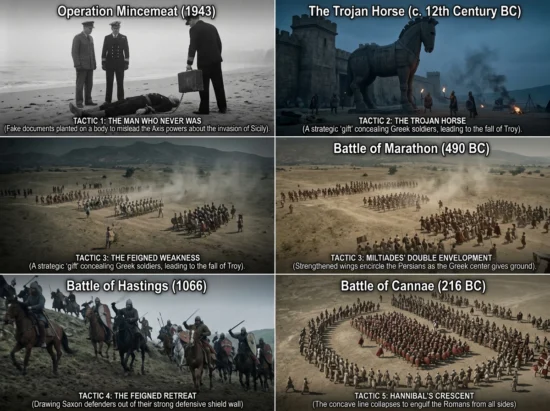
The Greatest Military Decisions in History
The art of warfare has been shaped by the decisions of great military leaders throughout history. From ancient battles to modern conflicts, the choices made by commanders have determined the outcome of wars and shaped the course of civilizations. In this article, we will explore some of the greatest military decisions in history, examining the circumstances that led to them and the consequences that followed.
Decisive Moments in Ancient Warfare
The earliest recorded wars provide valuable insights into the evolution of military strategy and tactics. One of the most significant decisions in ancient warfare was made by the Roman general, Scipio Africanus, during the Second Punic War.
Scipio’s Decision to Invade North Africa
In 210 BCE, Scipio was faced with the task of defeating the Carthaginian general, Hannibal, who had invaded Italy with a massive army. Instead of engaging Hannibal in a direct battle, Scipio decided to invade North Africa, where he hoped to defeat the Carthaginian naval forces and disrupt their supply lines. This bold decision ultimately led to the defeat of Hannibal and the Roman victory at the Battle of Zama in 202 BCE.
The Turning Points of World War II
The decisions made during World War II had a profound impact on the outcome of the conflict. One of the most significant was made by the German general, Erwin Rommel, also known as the “Desert Fox,” during the North African Campaign.
Rommel’s Decision to Retreat from El Agheila
In 1942, Rommel’s forces were advancing on the city of El Agheila, but he was faced with the reality of being outnumbered and outgunned by the British and Commonwealth forces. Instead of engaging in a costly battle, Rommel decided to retreat from El Agheila, which allowed him to conserve his forces and ultimately led to a series of victories against the Allies. However, this decision ultimately proved to be a turning point in the war, as the Allies were able to regroup and launch a series of counterattacks that pushed the Germans back.
The Strategic Blunders of Napoleon
Napoleon Bonaparte is widely regarded as one of the greatest military minds in history, but even he was not immune to making strategic blunders. One of the most significant was his decision to invade Russia in 1812.
Napoleon’s Decision to Invade Russia
Napoleon’s forces had been making significant gains in Europe, but he was faced with the reality of a growing coalition of European powers opposing him. He decided to invade Russia, hoping to defeat the Russian army and force the Russian government to surrender. However, the harsh Russian winter and the Russian scorched-earth tactics ultimately proved to be too much for the French army, leading to one of the greatest defeats in history.
The Masterstroke of Lee at Antietam
The American Civil War saw some of the most brutal and bloody battles in history, but one decision made by the Confederate general, Robert E. Lee, stands out as a masterstroke. His decision to advance on the Union army at Antietam in 1862 was a bold one, but it ultimately led to a series of victories for the Confederacy.
Lee’s Decision to Advance on the Union Army
Lee’s forces had been making significant gains in the war, but he was faced with the reality of being outnumbered and outgunned by the Union army. Instead of retreating, Lee decided to advance on the Union army, hoping to defeat them in a decisive battle. However, the Union army was able to regroup and launch a series of counterattacks that pushed the Confederates back.
Modern Warfare and the Art of Decision-Making
The decisions made by military leaders in the modern era have been shaped by the complexities of modern warfare. One of the most significant was made by the Israeli general, Ariel Sharon, during the Yom Kippur War in 1973.
Sharon’s Decision to Withdraw from the Sinai Peninsula
Sharon’s forces had been making significant gains in the war, but he was faced with the reality of being outnumbered and outgunned by the Egyptian army. Instead of engaging in a costly battle, Sharon decided to withdraw his forces from the Sinai Peninsula, which allowed him to conserve his troops and ultimately led to a series of victories against the Egyptians. However, this decision ultimately proved to be a turning point in the war, as the Egyptians were able to regroup and launch a series of counterattacks that pushed the Israelis back.
Conclusion
The decisions made by great military leaders throughout history have shaped the course of wars and civilizations. From ancient battles to modern conflicts, the choices made by commanders have determined the outcome of wars and led to some of the most significant moments in history. By examining the circumstances that led to these decisions and the consequences that followed, we can gain a deeper understanding of the art of warfare and the complexities of decision-making.
FAQ
Q: What was the significance of Scipio’s decision to invade North Africa?
Scipio’s decision to invade North Africa was significant because it allowed him to defeat the Carthaginian naval forces and disrupt their supply lines, ultimately leading to the defeat of Hannibal and the Roman victory at the Battle of Zama.
Q: What was the turning point in the North African Campaign?
The turning point in the North African Campaign was Rommel’s decision to retreat from El Agheila, which allowed him to conserve his forces and ultimately led to a series of victories against the Allies.
Q: What was the significance of Napoleon’s decision to invade Russia?
Napoleon’s decision to invade Russia was significant because it led to one of the greatest defeats in history, as the French army was unable to withstand the harsh Russian winter and the Russian scorched-earth tactics.
Q: What was the masterstroke of Lee at Antietam?
The masterstroke of Lee at Antietam was his decision to advance on the Union army, which led to a series of victories for the Confederacy and ultimately proved to be a turning point in the war.
Q: What is the importance of decision-making in modern warfare?
The importance of decision-making in modern warfare cannot be overstated. The decisions made by military leaders have a profound impact on the outcome of conflicts and can shape the course of history.