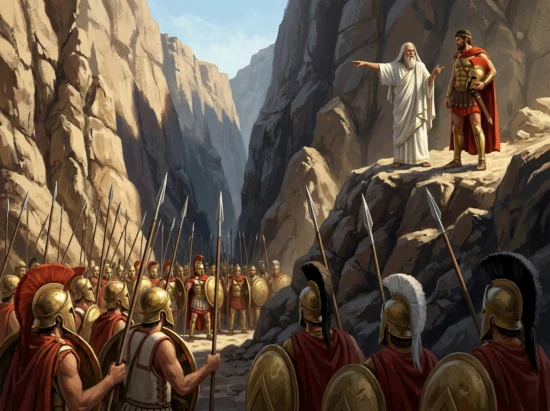
How Alexander Used Battlefield Geography
Ancient Military Strategies Meet Modern Understanding
As a renowned military leader, Alexander the Great left an indelible mark on history. His conquests of a vast portion of the known world, spanning from Greece to India, were facilitated by his mastery of battlefield geography. This article delves into the ways Alexander leveraged geographical features to outmaneuver his opponents, turning the land itself into a formidable ally.
The Power of Terrain in Warfare
Alexander’s campaigns often began with meticulous reconnaissance, where he would send scouts to gather information about the terrain. He understood that the land itself could be a decisive factor in battle, and he was willing to adapt his strategies to take advantage of it. The ancient Greeks prized knowledge of the land, recognizing that it could be a source of both strength and weakness.
Choosing the Right Terrain for Battle
Alexander’s selection of terrain for battle was not arbitrary. He sought out locations that offered him advantages in terms of visibility, access to resources, and the ability to control the flow of troops. He often chose to engage his enemies in open fields, where his cavalry could be utilized to devastating effect.
Alexander’s use of terrain was not limited to the battlefield itself. He also exploited the geography of the surrounding area to limit his enemy’s options and create opportunities for his own forces. By positioning his troops on high ground, he could gain a significant advantage in terms of visibility and firepower.
The Importance of Water in Warfare
Water played a crucial role in Alexander’s campaigns, and he was willing to go to great lengths to secure access to it. He understood that control of water sources could be a decisive factor in a battle, and he often sought to capture key rivers or lakes to limit his enemy’s mobility and resources.
Alexander‘s ability to adapt to different environments was a key factor in his success. He was equally at home in the scorching deserts of Egypt and the lush valleys of Greece. His willingness to learn from the land and its inhabitants allowed him to exploit their strengths and weaknesses, giving him a significant advantage over his opponents.
Intelligence Gathering and Battlefield Geography
Alexander’s intelligence gathering was a key aspect of his use of battlefield geography. He would often send scouts ahead to gather information about the terrain, enemy positions, and other key factors. This information would be used to inform his battle plans, allowing him to make the most of the land itself.
Alexander’s use of intelligence gathering was not limited to the battlefield itself. He also used his scouts to gather information about the local population, their sympathies, and potential alliances. This allowed him to build relationships with local leaders and secure their support for his campaigns.
The Legacy of Alexander’s Battlefield Geography
Alexander’s mastery of battlefield geography left a lasting legacy that can be seen in the tactics employed by military leaders to this day. His understanding of the importance of terrain in warfare has influenced the development of modern military strategies, from the use of topography to the deployment of troops.
Practical Applications of Battlefield Geography
Q: How can I use terrain to my advantage in battle?
A: Identify key features such as high ground, water sources, and narrow passes. Use these features to limit your enemy’s options and create opportunities for your own forces. Consider the flow of troops and the ability to control key points in the terrain.
Q: What role does intelligence gathering play in battlefield geography?
A: Intelligence gathering is a crucial aspect of battlefield geography. Send scouts ahead to gather information about the terrain, enemy positions, and other key factors. This information will be used to inform your battle plans and make the most of the land itself.
Q: How can I adapt my battle plans to different environments?
A: Be willing to learn from the land and its inhabitants. Alexander was equally at home in the scorching deserts of Egypt and the lush valleys of Greece. His ability to adapt to different environments was a key factor in his success.
Q: What is the importance of water in warfare?
A: Water played a crucial role in Alexander’s campaigns, and he was willing to go to great lengths to secure access to it. Control of water sources can be a decisive factor in a battle, limiting your enemy’s mobility and resources.
Conclusion
Alexander’s mastery of battlefield geography was a key factor in his success as a military leader. His ability to adapt to different environments, exploit the strengths and weaknesses of the land, and use intelligence gathering to inform his battle plans left a lasting legacy that can be seen in the tactics employed by military leaders to this day. By understanding the power of terrain in warfare, we can gain a deeper appreciation for the strategies employed by Alexander and the lasting impact they have had on the art of warfare.