The Weapons Used During Medieval Sieges
Medieval sieges were a common occurrence in the Middle Ages, with armies and fortifications engaging in prolonged battles to capture or defend strategic locations. The siege engines and weapons used during these battles were often a deciding factor in determining the outcome of the conflict. In this article, we will explore the various types of siege engines and weapons that were used during medieval sieges.
Siege Engines
Siege engines were the primary tools used to breach the defenses of a besieged fortification. There were several types of siege engines, each with its unique characteristics and applications.
Trebuchets
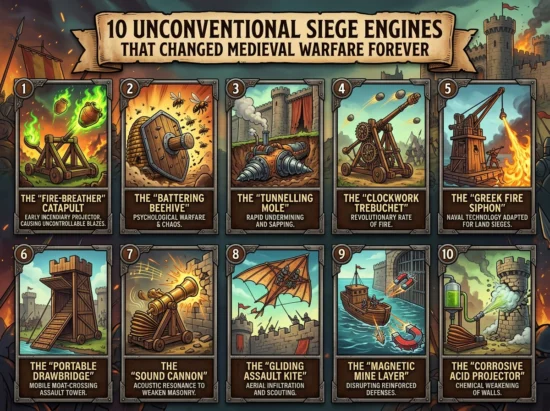
The trebuchet was a powerful siege engine that used a counterweight to launch projectiles, such as rocks or incendiary devices, at the walls of a besieged fortification. The trebuchet was the most common type of siege engine used during medieval sieges, and it played a crucial role in breaching the defenses of many fortifications.
Ballistae
The ballista was a torsion-powered siege engine that was used to launch projectiles, such as arrows or stones, at the walls of a besieged fortification. The ballista was a more sophisticated siege engine than the trebuchet and was often used in conjunction with the trebuchet to increase the effectiveness of the siege.
Scorpions
The scorpion was a type of siege engine that was used to launch projectiles, such as arrows or stones, at the walls of a besieged fortification. The scorpion was a smaller and more portable version of the ballista and was often used in conjunction with other siege engines to increase the effectiveness of the siege.
Other Siege Engines
In addition to the trebuchet, ballista, and scorpion, there were several other types of siege engines that were used during medieval sieges. These included:
- Battering rams: These were large, heavy wooden beams that were used to break down the gates of a besieged fortification.
- Wheeled towers: These were mobile platforms that were used to elevate siege engines and provide a higher vantage point for attacking the walls of a besieged fortification.
- Shield walls: These were large, mobile platforms that were used to protect the crew of a siege engine from enemy fire while they were in position to attack the walls of a besieged fortification.
Fire-Based Siege Engines
During medieval sieges, fire-based siege engines were used to attack the walls of a besieged fortification. These included:
Fireballs
Fireballs were incendiary devices that were used to attack the walls of a besieged fortification. They were typically made of flammable materials, such as pitch or tar, and were designed to stick to the walls of a fortification and burn for an extended period.
Greek fire
Greek fire was a type of incendiary device that was used during medieval sieges. It was a flammable liquid that was poured through a siphon and ignited, creating a stream of flame that was used to attack the walls of a besieged fortification.
Defensive Measures
During medieval sieges, fortifications used a variety of defensive measures to protect themselves from the attacking forces. These included:
Moats
Moats were a common defensive measure used during medieval sieges. They were large, deep ditches that were dug around the perimeter of a fortification and were designed to prevent attackers from reaching the walls of the fortification.
Palisades
Palisades were a type of defensive measure used during medieval sieges. They were large, wooden stakes that were placed along the perimeter of a fortification to prevent attackers from reaching the walls of the fortification.
Gatehouses
Gatehouses were a type of defensive measure used during medieval sieges. They were large, fortified structures that were designed to protect the gates of a fortification from attackers.
Conclusion
Medieval sieges were a common occurrence in the Middle Ages, and the siege engines and weapons used during these battles played a crucial role in determining the outcome of the conflict. The trebuchet, ballista, and scorpion were the most common types of siege engines used during medieval sieges, while fire-based siege engines, such as fireballs and Greek fire, were used to attack the walls of a besieged fortification. Defensive measures, such as moats, palisades, and gatehouses, were used to protect fortifications from the attacking forces.
FAQ
Q: What was the most common type of siege engine used during medieval sieges?
The most common type of siege engine used during medieval sieges was the trebuchet.
Q: What was the purpose of a scorpion during a medieval siege?
The scorpion was a type of siege engine that was used to launch projectiles, such as arrows or stones, at the walls of a besieged fortification.
Q: What was the name of the incendiary device that was used during medieval sieges?
The incendiary device that was used during medieval sieges was called Greek fire.
Q: What was the purpose of a moat during a medieval siege?
A moat was a large, deep ditch that was dug around the perimeter of a fortification to prevent attackers from reaching the walls of the fortification.