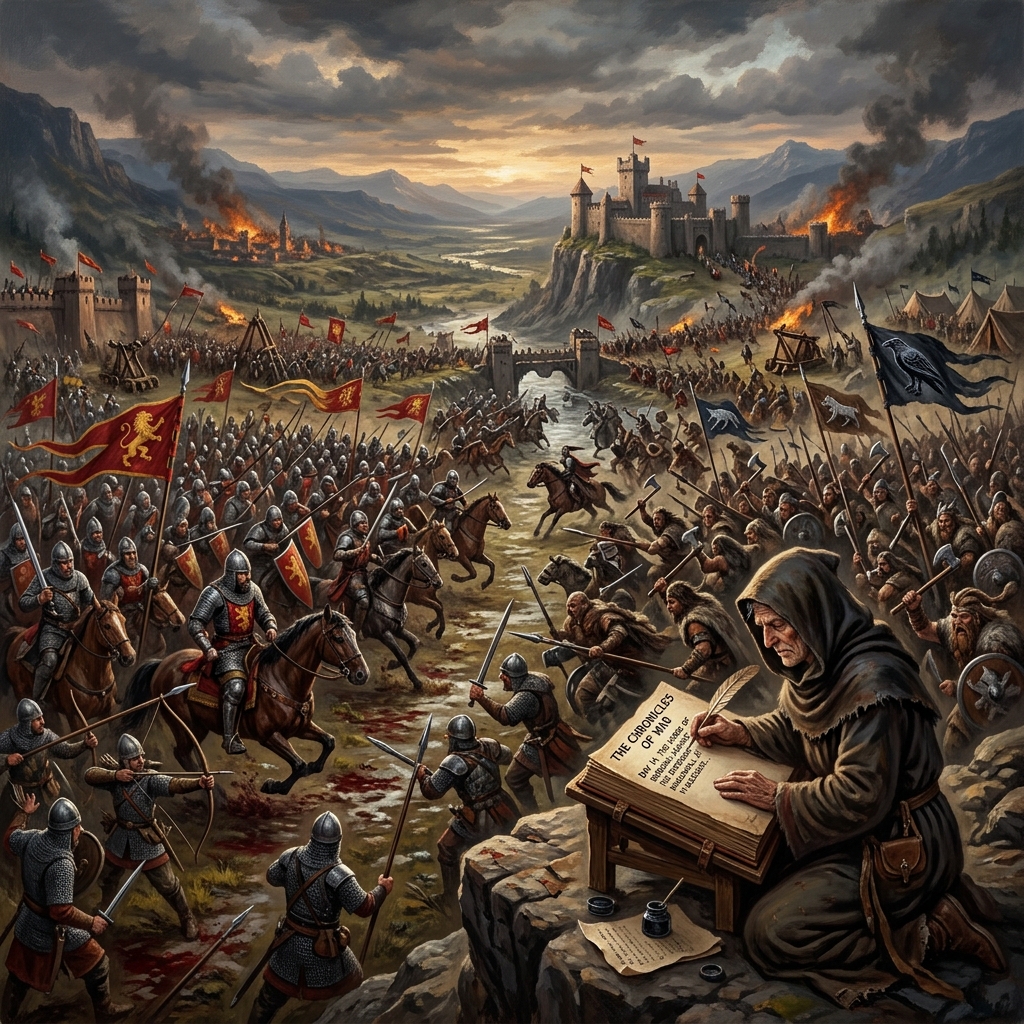
The Weapons of Alexander’s Army
A Look into the Arsenal of Ancient Greece’s Most Powerful Leader
When we think of ancient armies, the image of a phalanx formation of hoplites, with their long spears and shields, often comes to mind. However, Alexander’s army, which conquered a vast portion of the known world, was far more diverse and sophisticated in its weaponry. In this article, we will delve into the various arms and armor that made up the arsenal of Alexander’s forces, and explore how they contributed to the Macedonian king’s military successes.
The Infantry: Hoplites and the Phalanx Formation
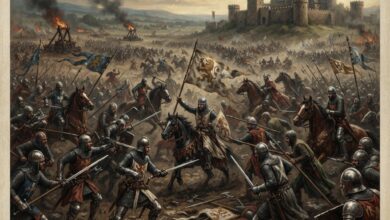
The infantry was the backbone of Alexander’s army, and the hoplites, with their distinctive phalanx formation, were the key to its success. The hoplites were heavily armored, equipped with a long spear called a “doros,” a large shield called a “hoplon,” and a helmet. They were also trained to present a wall of shields to the enemy, making it difficult for them to launch a successful attack. This formation allowed the hoplites to maintain a steady line, while also creating a dense and impenetrable barrier that protected the soldiers behind it.
- The doros, or long spear, was a primary weapon of the hoplites, used for both melee and ranged combat.
- The hoplon, or shield, was made of wood or bronze, and was often decorated with the emblem of the soldier’s unit.
- The helmet, or “kranos,” was a crucial part of the hoplite’s armor, providing protection for the head and neck.
The phalanx formation was not only effective in battle, but also served as a symbol of the hoplites’ discipline and cohesion. The soldiers in the front row, known as the “kybernetes,” were the most experienced and well-trained, and they led the charge into battle. Behind them, the rest of the hoplites formed a dense and impenetrable wall, making it difficult for the enemy to penetrate.
The Cavalry: The Companion Cavalry and the Thracian Cavalry
While the infantry was the backbone of Alexander’s army, the cavalry was its decisive factor in many battles. The Companion Cavalry, made up of the best and most experienced horsemen, was Alexander’s personal bodyguard and played a crucial role in many of his campaigns. They were equipped with a combination of a long spear, a short sword, and a large shield, and were trained to operate in close formation, much like the hoplites.
The Thracian Cavalry, on the other hand, was a more mobile and flexible force, made up of lighter-armed horsemen who were trained to operate in open terrain. They were equipped with a short spear, a short sword, and a smaller shield, and were used to scout out enemy positions and disrupt their supply lines.
The Siege Engines: The Ballista and the Scorpion
While Alexander’s army was primarily a land-based force, they also made use of siege engines to breach enemy fortifications. The ballista, a type of catapult, was used to launch heavy projectiles at enemy walls, while the scorpion, a type of torsion engine, was used to launch smaller projectiles at enemy soldiers. These engines were often used in combination with each other, and were a key factor in the capture of many cities and fortresses.
The Artillery: The Catapults and the Torsion Engines
While the ballista and scorpion were the primary siege engines of Alexander’s army, they also made use of other types of artillery, including catapults and torsion engines. These engines were used to launch heavy projectiles at enemy walls, and were often used in combination with each other. The catapults, in particular, were used to launch heavy projectiles, such as rocks and stones, at enemy walls, while the torsion engines were used to launch smaller projectiles, such as arrows and darts.
The Armor: The Helmets, Shields, and Armor
The armor of Alexander’s army was a crucial factor in its success, providing protection for the soldiers from the harsh realities of battle. The helmets, shields, and armor were all made of leather, wood, or bronze, and were often decorated with the emblem of the soldier’s unit. The armor was also designed to be flexible, allowing the soldiers to move freely and maintain a steady line.
The Tactics: The Phalanx Formation and the Pincer Movement
The tactics of Alexander’s army were designed to take advantage of the strengths of the various arms and armor. The phalanx formation, in particular, was used to create a dense and impenetrable barrier, making it difficult for the enemy to penetrate. The pincer movement, on the other hand, was used to surround and isolate enemy forces, making it difficult for them to escape or receive reinforcements.
Conclusion
Alexander’s army was a highly effective and sophisticated force, made up of a diverse array of arms and armor. The hoplites, with their phalanx formation, were the backbone of the army, while the cavalry, with its combination of speed and maneuverability, was its decisive factor in many battles. The siege engines, including the ballista and the scorpion, were used to breach enemy fortifications, while the artillery, including the catapults and the torsion engines, were used to launch heavy projectiles at enemy walls. The armor, including the helmets, shields, and armor, provided protection for the soldiers from the harsh realities of battle, while the tactics, including the phalanx formation and the pincer movement, were designed to take advantage of the strengths of the various arms and armor.
FAQ
What was the primary weapon of the hoplites?
The primary weapon of the hoplites was the doros, or long spear, which was used for both melee and ranged combat.
What was the purpose of the hoplon, or shield?
The hoplon, or shield, was used to create a dense and impenetrable barrier, making it difficult for the enemy to penetrate. It was also used to protect the soldier from the harsh realities of battle.
What was the difference between the Companion Cavalry and the Thracian Cavalry?
The Companion Cavalry was made up of the best and most experienced horsemen, and was used as Alexander’s personal bodyguard. The Thracian Cavalry, on the other hand, was a more mobile and flexible force, made up of lighter-armed horsemen who were trained to operate in open terrain.
What was the primary siege engine of Alexander’s army?
The ballista, a type of catapult, was the primary siege engine of Alexander’s army, used to launch heavy projectiles at enemy walls.