The History of Siege Warfare Explained
A Brief Introduction to Siege Warfare
Siege warfare has been a fundamental aspect of military strategy throughout human history. The term “siege” refers to a prolonged attack on a fortified position, such as a castle, city, or other defended stronghold, with the goal of capturing or destroying it. The concept of siege warfare dates back to ancient civilizations, where it was employed by various cultures to achieve strategic objectives.
Early Examples of Siege Warfare
The earliest recorded instances of siege warfare can be found in ancient Mesopotamia, where the city-states of Sumer, Babylon, and Assyria frequently employed siege engines and tactics to capture and defend their territories. The ancient Egyptians also employed siege warfare during their conquests of neighboring lands, as did the ancient Greeks and Romans.
The Evolution of Siege Engines
The development of siege engines played a crucial role in the evolution of siege warfare. The earliest siege engines were simple ramps and towers, which allowed soldiers to breach walls and access the enemy’s stronghold. As technology advanced, more sophisticated siege engines emerged, including catapults, ballistae, and battering rams. These engines enabled armies to breach defenses and capture fortified positions with greater ease.
The Medieval Period and the Rise of Castles
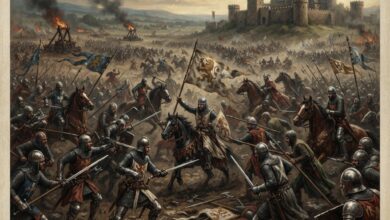
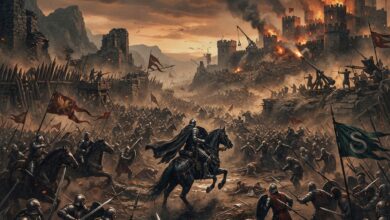
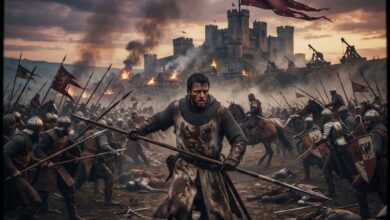
The Middle Ages saw the rise of castles, fortified strongholds that served as centers of power and defense. Castles were designed to withstand prolonged sieges, with features such as high walls, moats, and defensive towers. The development of siege engines and tactics continued, with the introduction of new technologies like the trebuchet and the mangonel. These advances allowed armies to breach castle walls and capture strongholds.
The Age of Gunpowder and the Decline of Fortifications
The introduction of gunpowder in the 14th century marked a significant turning point in the history of siege warfare. The development of artillery and firearms rendered traditional fortifications obsolete, as they could be easily breached by cannon fire. The introduction of modern fortifications, such as bastion forts and star forts, attempted to counter the threat of artillery, but ultimately proved ineffective.
Modern Siege Warfare and the Use of Technology
Modern siege warfare has evolved to incorporate advanced technologies, such as precision-guided munitions and drone warfare. The development of these technologies has enabled armies to breach defenses with greater ease and precision, rendering traditional fortifications even more obsolete. Contemporary siege warfare also emphasizes the use of psychological warfare and information operations to demoralize and disrupt enemy forces.
Conclusion
Siege warfare has been a fundamental aspect of military strategy throughout human history. From ancient Mesopotamia to modern times, siege warfare has evolved to incorporate new technologies and tactics. The development of siege engines and artillery has enabled armies to breach defenses and capture fortified positions with greater ease, while the introduction of gunpowder and modern technologies has rendered traditional fortifications obsolete. Understanding the history of siege warfare provides valuable insights into the development of military strategy and the importance of adapting to changing technologies and circumstances.
FAQ
Q: What is the earliest recorded instance of siege warfare?
A: The earliest recorded instance of siege warfare can be found in ancient Mesopotamia, where the city-states of Sumer, Babylon, and Assyria frequently employed siege engines and tactics to capture and defend their territories.
Q: What were some of the earliest siege engines employed in ancient warfare?
A: Some of the earliest siege engines employed in ancient warfare included simple ramps and towers, which allowed soldiers to breach walls and access the enemy’s stronghold. As technology advanced, more sophisticated siege engines emerged, including catapults, ballistae, and battering rams.
Q: How did the introduction of gunpowder impact siege warfare?
A: The introduction of gunpowder in the 14th century marked a significant turning point in the history of siege warfare. The development of artillery and firearms rendered traditional fortifications obsolete, as they could be easily breached by cannon fire.
Q: What is the significance of modern siege warfare in contemporary military strategy?
A: Modern siege warfare has evolved to incorporate advanced technologies, such as precision-guided munitions and drone warfare. The development of these technologies has enabled armies to breach defenses with greater ease and precision, rendering traditional fortifications even more obsolete. Contemporary siege warfare also emphasizes the use of psychological warfare and information operations to demoralize and disrupt enemy forces.