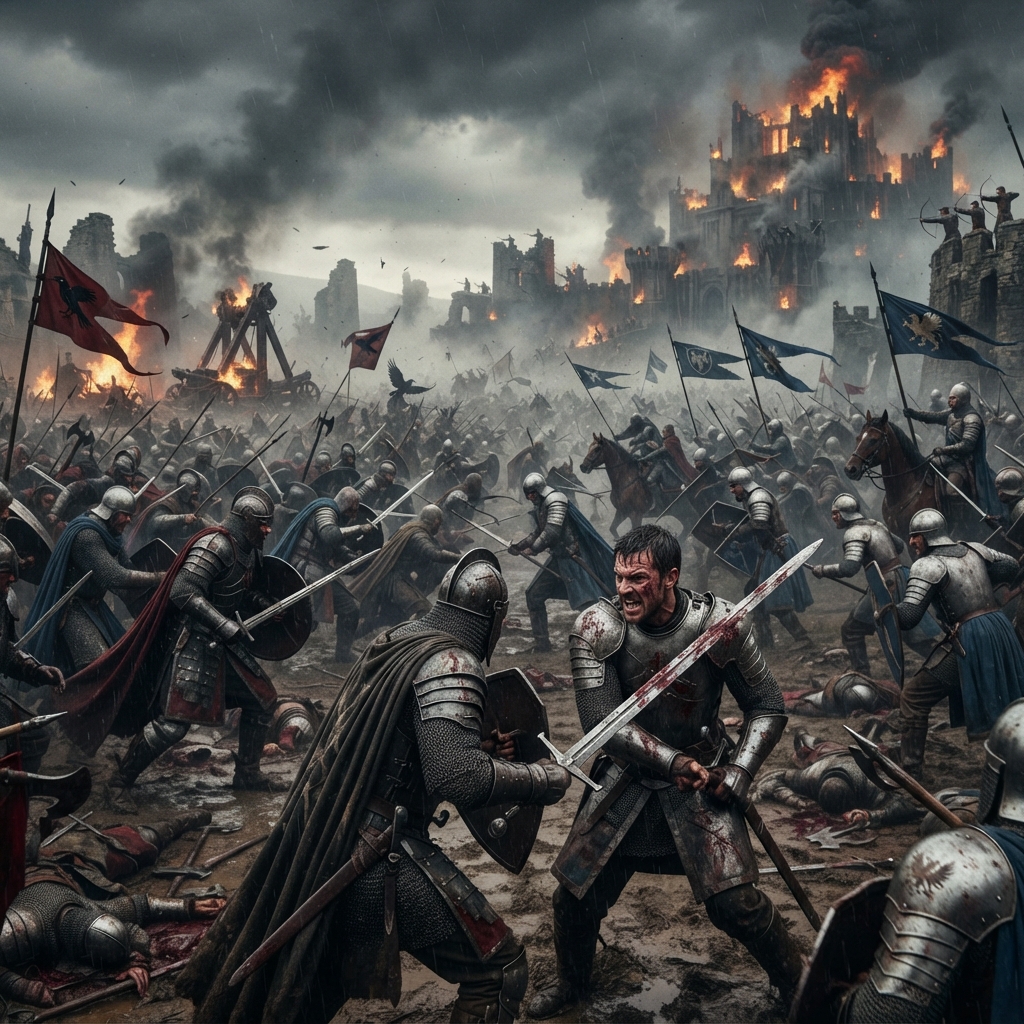
The Role of Propaganda in Historical Warfare
Introduction
Propaganda has long been a tool of war, used by nations and armies to sway public opinion, demoralize the enemy, and inspire their own troops. From the ancient Greeks to modern-day militaries, propaganda has played a significant role in shaping the course of historical warfare. This article will delve into the history of propaganda in warfare, its various forms and functions, and its impact on the outcome of conflicts.
The Early Days of Propaganda in Warfare
In ancient Greece, the Spartans used propaganda to inspire their troops and demoralize their enemies. The famous Spartan general, Brasidas, was known for his ability to rally his troops with stirring speeches and clever propaganda. The Spartans also used propaganda to promote their unique way of life, which emphasized discipline, courage, and martial prowess.
Examples of Propaganda in Ancient Warfare
- The Spartan propaganda machine was instrumental in the victory over the Athenians at the Battle of Mantinea in 418 BCE.
- The Spartans also used propaganda to promote their victory over the Persians at the Battle of Thermopylae in 480 BCE.
Propaganda in the Age of Enlightenment and Industrialization
As warfare became more complex and mechanized, propaganda became a more sophisticated tool of war. During the Napoleonic Wars, the French used propaganda to promote the ideals of the Revolution and to demonize their enemies. The French also used propaganda to promote their military successes and to demoralize the enemy.
Examples of Propaganda in the Age of Enlightenment and Industrialization
- The French propaganda machine was instrumental in the victory over the Austrians at the Battle of Austerlitz in 1805.
- The British also used propaganda to promote their military successes and to demoralize the enemy during the Napoleonic Wars.
Propaganda in World War I and II
During World War I and II, propaganda became a key component of warfare. Governments and armies used propaganda to promote their military successes, to demonize their enemies, and to inspire their own troops. The Allies used propaganda to promote the idea of a democratic, free world, while the Axis powers promoted the idea of a fascist, totalitarian regime.
Examples of Propaganda in World War I and II
- The Allies used propaganda to promote the idea of a democratic, free world during World War I.
- The Nazis used propaganda to promote the idea of a fascist, totalitarian regime during World War II.
The Role of Propaganda in Modern Warfare
In modern warfare, propaganda continues to play a significant role. Governments and armies use propaganda to promote their military successes, to demonize their enemies, and to inspire their own troops. The use of social media, the internet, and other forms of modern communication has made it easier for propaganda to be disseminated and to have a greater impact on public opinion.
Examples of Propaganda in Modern Warfare
- The US government used propaganda to promote the idea of a democratic, free world during the Iraq War.
- The Russian government used propaganda to promote the idea of a nationalist, anti-Western regime during the annexation of Crimea.
The Impact of Propaganda on Historical Warfare
Propaganda has had a significant impact on the outcome of historical warfare. By shaping public opinion and demoralizing the enemy, propaganda has helped to secure military victories and to promote the goals of a particular nation or regime. However, propaganda has also been used to promote false information, to demonize innocent people, and to justify atrocities.
The Dark Side of Propaganda
- Propaganda has been used to justify atrocities, such as the Holocaust and the Rwandan Genocide.
- Propaganda has been used to promote false information, such as the existence of WMDs in Iraq.
Conclusion
Propaganda has played a significant role in historical warfare, shaping public opinion, demoralizing the enemy, and inspiring their own troops. From ancient Greece to modern-day militaries, propaganda has been a key component of warfare. While propaganda can be a powerful tool of war, it must be used responsibly and with caution, lest it be used to justify atrocities and to promote false information.
FAQ
What is the difference between propaganda and persuasion?
Propaganda is the dissemination of information or ideas in order to influence public opinion or to promote a particular cause or ideology. Persuasion is the act of convincing someone to adopt a particular point of view or to take a particular action. While both propaganda and persuasion can be used to influence public opinion, propaganda is often used to promote a particular ideology or to justify a particular course of action.
How has propaganda changed over time?
Propaganda has changed significantly over time. In ancient Greece, propaganda was used to promote the ideals of the Spartans and to demoralize their enemies. In the age of Enlightenment and Industrialization, propaganda was used to promote the ideals of the Revolution and to demonize their enemies. In modern warfare, propaganda is used to promote the idea of a democratic, free world and to demoralize the enemy.
What are some examples of effective propaganda?
Some examples of effective propaganda include the Spartans’ victory at the Battle of Thermopylae, the French propaganda machine during the Napoleonic Wars, and the US government’s propaganda efforts during the Iraq War.
What are some examples of ineffective propaganda?
Some examples of ineffective propaganda include the Nazi propaganda efforts during World War II, which ultimately failed to promote the Nazi ideology and to justify the atrocities committed by the regime.