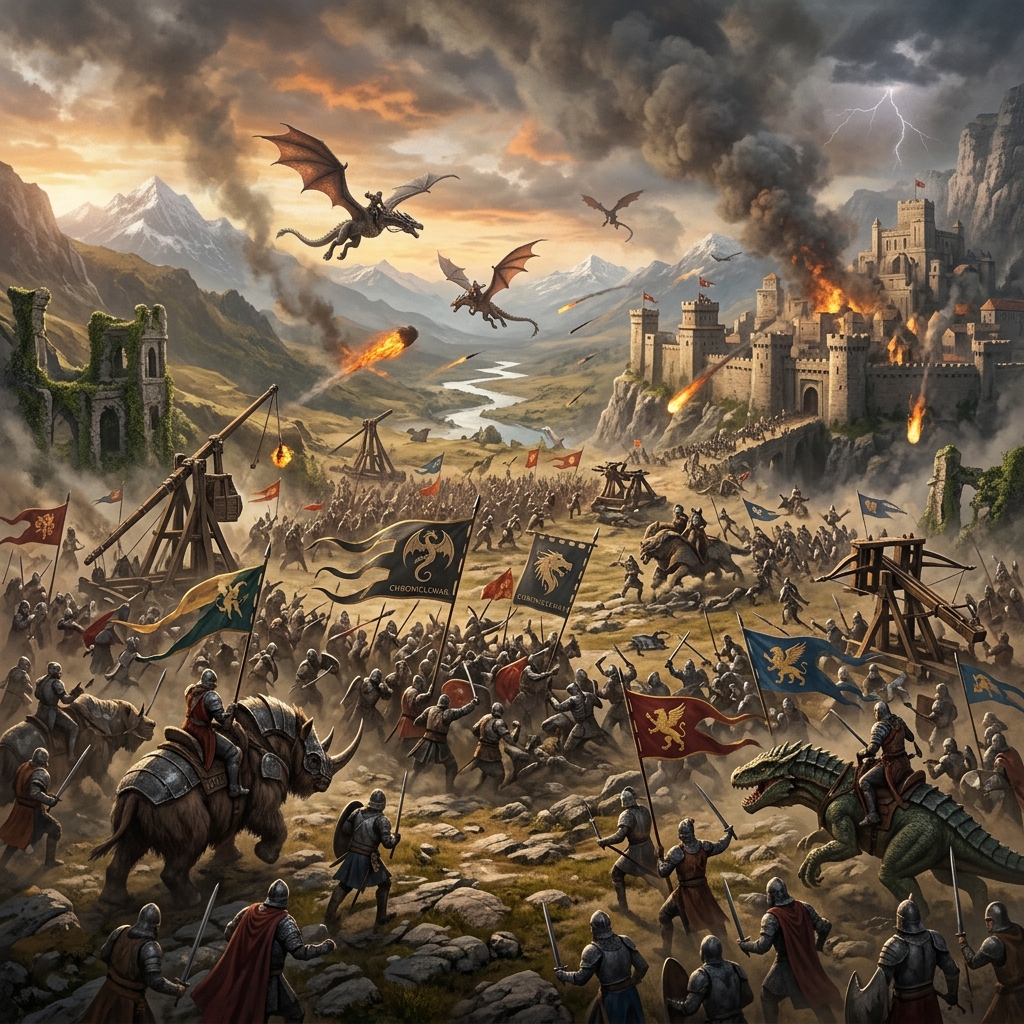
The Weapons Used During Medieval Sieges
Introduction
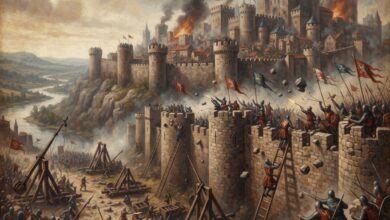
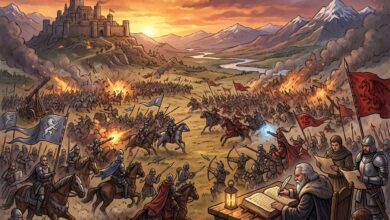
Medieval sieges were a common occurrence during the Middle Ages, with armies and fortifications engaging in prolonged battles for control. The siege engines and tools used during this time played a crucial role in determining the outcome of these battles. This article explores the various weapons used during medieval sieges, from the earliest catapults to the more sophisticated trebuchets and cannons.
Early Siege Engines
The earliest siege engines were simple in design, yet effective in their purpose. The first catapults, also known as ballistae, were used by the ancient Greeks and Romans to launch stones and other projectiles at enemy fortifications. These early catapults were powered by torsion or tension, with the Greeks using twisted animal sinews and the Romans employing wooden frames with iron fulcrums.
As the Middle Ages progressed, the design of catapults became more sophisticated, with the introduction of the counterweight and the use of pulleys to increase the distance and accuracy of launched projectiles.
Trebuchets and the Rise of the Counterweight
The trebuchet, a medieval siege engine, was the precursor to the modern catapult. It used a counterweight to store potential energy, which was released to propel a projectile towards the enemy fortification. The trebuchet’s design allowed for a wider range of motion and increased the accuracy of launched projectiles.
The trebuchet’s effectiveness was due in part to the counterweight, which allowed for a more controlled release of energy. This, combined with the use of pulleys and ropes, made the trebuchet a formidable siege engine.
Cannons and the Advent of Gunpowder
The introduction of gunpowder in the 14th century revolutionized siege warfare. Cannons, such as the early bombard and the more advanced culverin, were used to launch projectiles at enemy fortifications. The use of gunpowder allowed for a more rapid and destructive form of siege warfare.
The first cannons were simple in design, but their impact was significant. As the technology improved, so did the accuracy and range of cannons, making them a key component in medieval siege warfare.
The Use of Fire and Flame
In addition to catapults and cannons, medieval armies also employed the use of fire and flame to breach enemy fortifications. The Greeks and Romans used fire to destroy enemy ships and fortifications, while the medieval armies used a variety of techniques to create fireballs and incendiary devices.
The use of fire and flame was a key component in medieval siege warfare, with armies employing a range of techniques to create and control fire. From the use of pitch and sulfur to the creation of fireballs, medieval armies used fire to devastating effect.
The Role of the Engineer
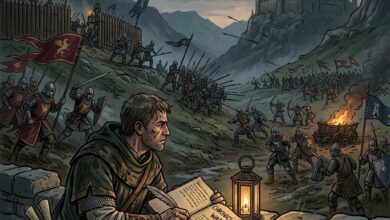
During medieval sieges, the engineer played a crucial role in the design and construction of siege engines. These individuals were skilled in the use of mathematics and physics to create complex machines that could breach enemy fortifications.
Engineers were responsible for designing and building siege engines, as well as overseeing their deployment and use during battles. Their skills were highly valued, and they played a key role in determining the outcome of medieval sieges.
The Impact of Siege Warfare
The use of siege engines and tools during medieval sieges had a profound impact on the outcome of battles. The ability to breach enemy fortifications and destroy enemy defenses gave armies a significant advantage, allowing them to take control of key territories and establish their dominance.
The impact of siege warfare was felt throughout the Middle Ages, with armies employing a range of techniques to breach enemy fortifications and gain control of key territories. The use of siege engines and tools played a key role in shaping the course of medieval history.
Conclusion
The use of siege engines and tools during medieval sieges was a complex and multifaceted phenomenon. From the earliest catapults to the more sophisticated trebuchets and cannons, medieval armies employed a range of techniques to breach enemy fortifications and gain control of key territories.
The impact of siege warfare was significant, with armies employing a range of techniques to breach enemy defenses and establish their dominance. The use of siege engines and tools played a key role in shaping the course of medieval history, and their legacy can still be seen today.
FAQ
Q: What was the first siege engine used during medieval sieges?
A: The first siege engine used during medieval sieges was the catapult, also known as the ballista. This simple yet effective machine was used by the ancient Greeks and Romans to launch stones and other projectiles at enemy fortifications.
Q: What was the key component in the design of the trebuchet?
A: The key component in the design of the trebuchet was the counterweight, which allowed for a more controlled release of energy. This, combined with the use of pulleys and ropes, made the trebuchet a formidable siege engine.
Q: How did the introduction of gunpowder impact siege warfare?
A: The introduction of gunpowder in the 14th century revolutionized siege warfare, allowing for a more rapid and destructive form of siege warfare. The first cannons, such as the early bombard and the more advanced culverin, were used to launch projectiles at enemy fortifications.
Q: What role did the engineer play during medieval sieges?
A: During medieval sieges, the engineer played a crucial role in the design and construction of siege engines. These individuals were skilled in the use of mathematics and physics to create complex machines that could breach enemy fortifications.
Q: What was the impact of siege warfare on medieval history?
A: The impact of siege warfare was significant, with armies employing a range of techniques to breach enemy defenses and establish their dominance. The use of siege engines and tools played a key role in shaping the course of medieval history, and their legacy can still be seen today.