Alexander’s Greatest Military Campaigns
Alexander the Great, one of history’s most renowned military leaders, left an indelible mark on the ancient world. His conquests took him from Greece to India, leaving a trail of defeated empires and cultures in his wake. In this article, we will delve into the greatest military campaigns of Alexander’s illustrious career, examining the strategic brilliance, tactical prowess, and sheer force of will that made him a legend in his own time.
The Persian Empire: A Colossal Conquest
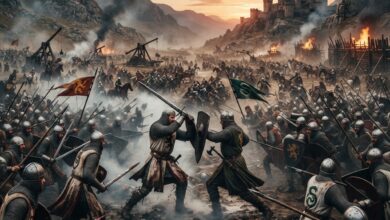
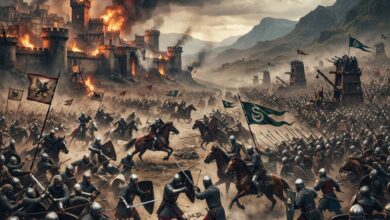
Alexander’s greatest campaign was undoubtedly his invasion of the Persian Empire, which began in 334 BCE. This campaign showcased his military genius, as he successfully defeated the Persians at the Battle of Granicus, the Battle of Issus, and the Battle of Gaugamela. The latter, fought in 331 BCE, was a decisive victory that led to the fall of Babylon, the capital of the Persian Empire.
The key to Alexander’s success lay in his ability to adapt his tactics to the terrain and the enemy. He expertly utilized the phalanx formation, a dense formation of long spears that provided protection from enemy cavalry. This allowed him to counter the Persian cavalry’s advantage and exploit their weaknesses.
The Siege of Tyre
In 332 BCE, Alexander laid siege to the strategic city of Tyre, a major Phoenician port on the island of Tyre. The city was heavily fortified and protected by a massive wall of earth and stone, but Alexander’s ingenuity and determination ultimately led to its downfall.
The siege was a masterclass in siege warfare, as Alexander used a combination of engineering, diplomacy, and brute force to breach the city’s defenses. He constructed a causeway out of mud and wooden pilings to reach the island, and then built a massive siege tower to breach the walls. The city eventually fell, and Alexander incorporated its vast resources into his empire.
The Battle of the Hydaspes
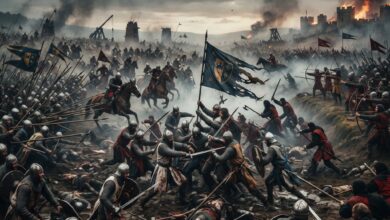
In 326 BCE, Alexander faced off against the Indian king Porus, who had assembled a massive army to defend his kingdom. The resulting battle, fought on the banks of the Jhelum River, was a bloody and chaotic affair that showcased Alexander’s military prowess.
Despite being outnumbered, Alexander’s army emerged victorious, thanks in part to his clever use of terrain and the phalanx formation. The Indian army, which was largely cavalry-based, was no match for the disciplined and cohesive Macedonian forces.
The Conquest of Bactria and Sogdiana
In 329 BCE, Alexander launched a campaign against the ancient kingdoms of Bactria and Sogdiana, which are now part of modern-day Afghanistan and Uzbekistan. The campaign was a series of skirmishes and sieges, as Alexander’s forces gradually wore down the local resistance.
One of the most significant aspects of this campaign was the introduction of new technologies, such as the catapult and the ballista, which allowed Alexander’s army to breach the defenses of the local cities. This campaign marked the beginning of Alexander’s expansion into the vast territories of Central Asia.
A Military Legacy
Alexander’s military campaigns had a profound impact on the ancient world, as his armies spread Greek culture and language throughout the territories they conquered. The spread of Greek culture had a lasting effect on the development of Western civilization, and Alexander’s legacy continues to be felt to this day.
As a military leader, Alexander’s greatest strength lay in his ability to adapt to changing circumstances and to innovate in the face of adversity. His campaigns were marked by a relentless drive and a willingness to take risks, which ultimately led to his success.
FAQ
Q: What was the significance of Alexander’s conquest of the Persian Empire?
A: The conquest of the Persian Empire marked the beginning of Alexander’s expansion into the vast territories of the ancient world, and it showcased his military genius as he successfully defeated the Persians at the Battle of Granicus, the Battle of Issus, and the Battle of Gaugamela.
Q: What was the role of the phalanx formation in Alexander’s military campaigns?
A: The phalanx formation, a dense formation of long spears, provided protection from enemy cavalry and allowed Alexander to counter the Persian cavalry’s advantage. This formation was a key component of Alexander’s military strategy, and it played a crucial role in many of his victories.
Q: What was the outcome of the Battle of the Hydaspes?
A: The Battle of the Hydaspes was a decisive victory for Alexander, as his army emerged victorious despite being outnumbered. The Indian army, which was largely cavalry-based, was no match for the disciplined and cohesive Macedonian forces.
Q: What was the impact of Alexander’s military campaigns on the ancient world?
A: Alexander’s military campaigns had a profound impact on the ancient world, as his armies spread Greek culture and language throughout the territories they conquered. The spread of Greek culture had a lasting effect on the development of Western civilization, and Alexander’s legacy continues to be felt to this day.
Q: What was the significance of Alexander’s conquest of Bactria and Sogdiana?
A: The conquest of Bactria and Sogdiana marked the beginning of Alexander’s expansion into the vast territories of Central Asia, and it showcased his ability to adapt to changing circumstances and innovate in the face of adversity.
Conclusion
Alexander the Great’s military campaigns were a series of breathtaking successes that left a lasting impact on the ancient world. His ability to adapt to changing circumstances, innovate in the face of adversity, and harness the power of technology allowed him to conquer vast territories and spread Greek culture throughout the ancient world. As a military leader, Alexander’s legacy continues to be felt to this day, and his campaigns remain a testament to his enduring legacy.